Future of Academic Publishing: AI, Open Access, and Research Standards






The world of academic publishing is in the midst of unprecedented change. The progress in technology, along with the evolving need for more transparent, more accessible, and more efficient academic publishing, is reshaping what it means to share research and what it means to make academic journals better. It may be in terms of open access publications or even in terms of artificial intelligence-based editing, but academic publishing is more complex and in motion than ever before.
Open Access
Democratizing Knowledge Open access publications are still in the process of revolutionizing the conventional approach to academic publishing. The absence of any subscription charges allows open access journals to provide worldwide access to the results of research findings at any given time. This democratization of knowledge is helping accelerate international collaborations, especially for researchers in developing and middle-income countries who cannot access subscription-based journals.
Nevertheless, there are challenges inherent in open access. For example, article processing charges may pose a financial burden on an individual researcher or an institution with limited financial resources. Additionally, there is an increase in publications, and this has led to an increase in predatory publishing practices. As a result, it is crucial for writers to be careful and selective when choosing publications. Editorial services and publication mentors play a crucial role in guiding writers towards credible publications.
Artificial Intelligence in Scholarly Communication
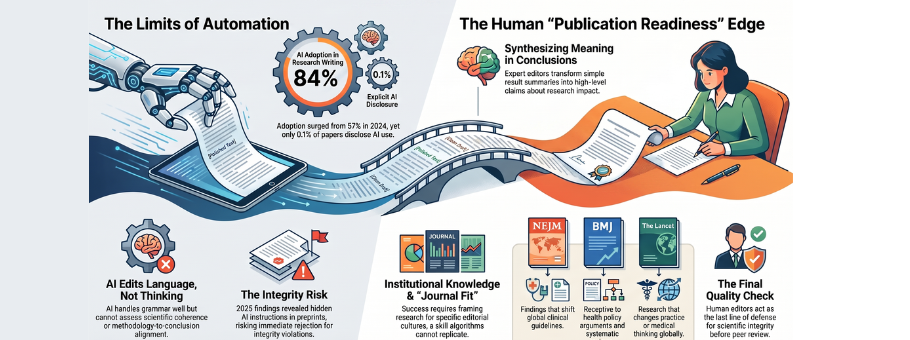
Artificial intelligence has become an integral part of the academic process, from literature surveying to paper writing. Artificial intelligence helps the author by simplifying the process of grammar correction, sentence writing, and citation management. It has also been reported that artificial intelligence can sometimes detect inconsistencies in the way data is represented and can also detect plagiarism.
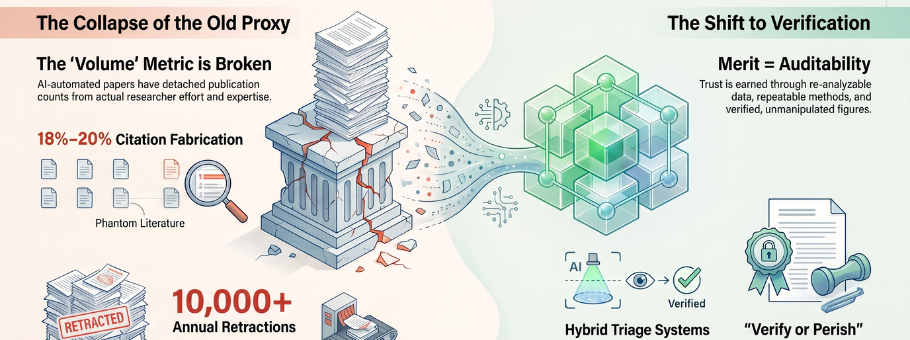
However, it is also important to note that though AI makes things efficient, it is not a replacement for expert editor judgment. Though AI will bring changes in style and such issues to our notice, it is not possible to understand context and scientific argument without expertise. Hybrid techniques are being developed by journals and editors to integrate efficiency and human expertise together.
Strengthening Research Integrity
Transparency and reproducibility have emerged as major concerns in modern research. It is increasingly required of authors to provide detailed methodological information, data and code availability, and ethical standards in human and animal studies. Review at the editorial end ensures these standards are met, thus lending credibility to research.
Similarly, reproducibility and open science strategies can also assist in minimizing the likelihood of errors and misconducts in research. For instance, it is encouraged in many journals for authors to pre-register their studies and share their raw data, which could ensure higher accountability and reliability of science published in such journals in the long term. The editor is also a facilitator in such a process and helps authors with suggestions on aspects such as clarity, completeness, and ethical issues.
Trends Shaping the Publishing Industry
There are different trends that will shape the publishing industry in the coming years. They are:
- Interdisciplinary Research Integration: There is an increase in collaborative works of research coming from different disciplines. The editor and reviewer have to evaluate the research based on different frameworks of research methods.
- Globalization of Research: The contribution of researchers from non-English-speaking countries is growing in terms of total body of research literature. Language editing and sensitive guidance are crucial here.
- Data-Driven Decision Making: Journals are utilizing data analysis for improving the efficiency of peer review, citation impact, and other editorial decisions.
- Ethical Compliance and Transparency: More stringent rules for disclosing conflicts of interest, author contributions, and AI writing are being implemented.
Conclusion
The academic publishing landscape is changing to meet the requirements of accessibility, efficiency, and integrity with the emergence of the open-access model and the incorporation of AI technologies, as well as the enforcement of transparency standards. It requires researchers and editors to keep up with the changing academic publishing landscape and to take advantage of the various innovations that technology offers while ensuring the academic integrity of the process. By ensuring the quality and integrity of the manuscripts, the academic expertise of the editors will be able to deliver the research to the audience with the required efficiency.
- By clicking here, I state that I have read and understood the terms and conditions mentioned above.