




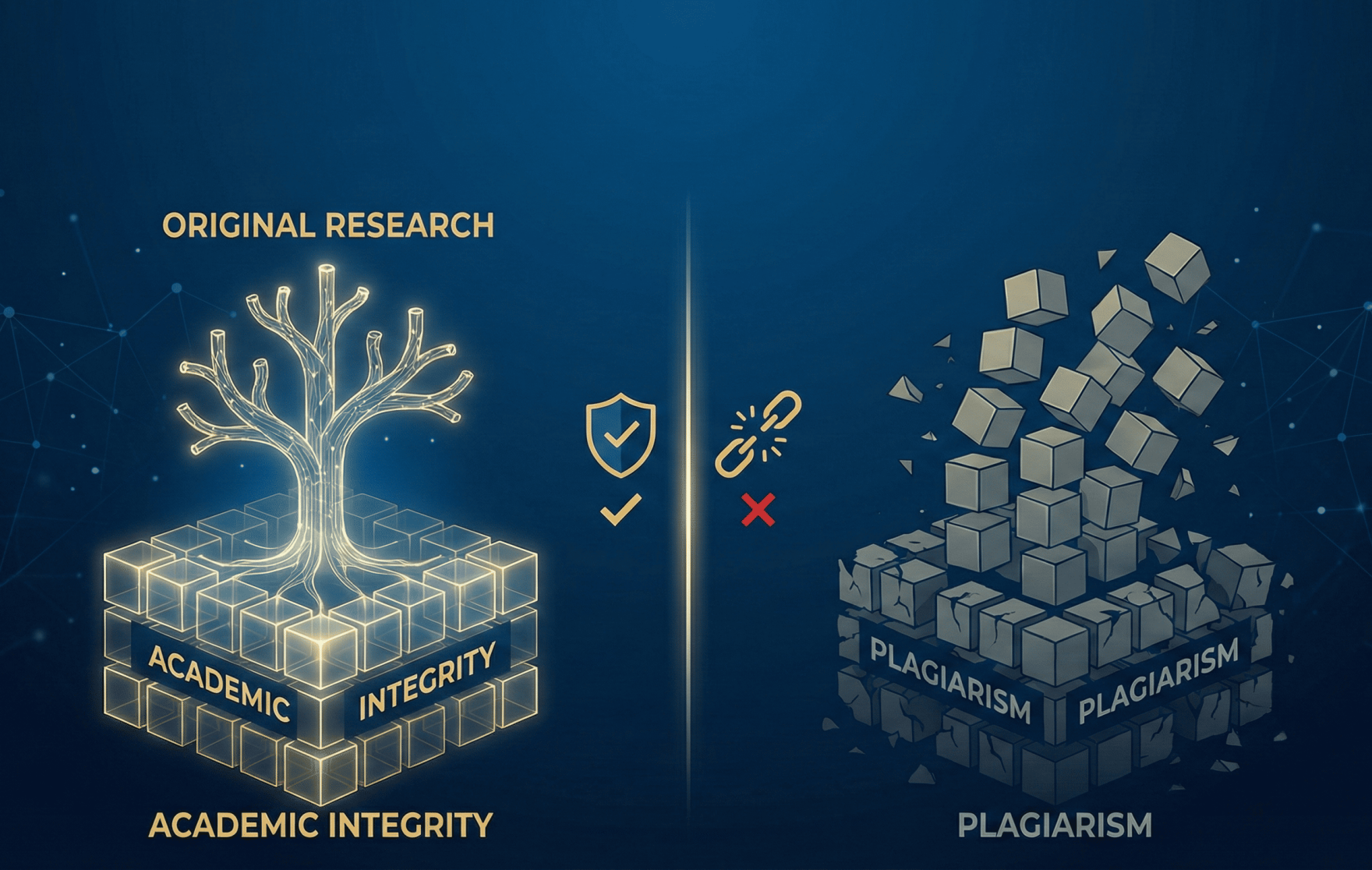
More than 10,000 research papers were retracted in 2023, a record that underlines how breaches of research integrity plagiarism among them can erode trust in the scholarly record and waste resources. This scale of corrective action matters to early-career and experienced researchers, university leaders, and publishers alike: retractions, investigations, and reputational damage slow scientific progress, consume institutional time, and can jeopardize careers.
This article defines plagiarism and related concepts, explains why originality is foundational to research integrity, outlines common forms and drivers of plagiarism, and offers practical, evidence-based steps researchers and administrators can take to prevent, detect, and respond to overlap.
What Is Plagiarism and How Is It Different From Related Issues?
Plagiarism is the representation of another person’s words, ideas, or expressions as one’s own. It includes verbatim copying without attribution, close paraphrasing without credit, and misrepresenting authorship or sources.
Self-plagiarism (often called text recycling) refers to reusing substantial portions of one’s own previously published text without clear citation and transparency. Although it does not appropriate another author’s intellectual property, editors and ethics bodies treat it separately because it can still mislead readers and distort the literature.
While definitions and legal treatments vary by jurisdiction and discipline, the ethical principle is consistent: if the text, data, or ideas were not newly created for the submission, they must be disclosed and cited.
Why Integrity and Originality Matter to Research
1. Reproducibility and Cumulative Knowledge
Scientific progress depends on truthful reporting. When text, data, or figures are misrepresented, subsequent studies may build on unreliable foundations. Retractions correct the record, but they do not erase prior citations, derivative analyses, or policy decisions that relied on the affected work.
Recent analyses of retraction trends show that while improved detection plays a role, the surge also exposes systemic vulnerabilities in peer review and editorial oversight.
2. Careers, Institutions, and Trust
Plagiarism intentional or inadvertent can result in manuscript rejection, delayed publication, loss of funding, or disciplinary action. Many journals now screen submissions routinely using similarity-detection tools and follow COPE-recommended workflows when overlap is suspected, raising the stakes for authors at every career stage.
3. Downstream Harm in Applied Research
For clinicians and policy-relevant researchers, inaccurate literature can cause direct harm when flawed evidence informs guidelines or interventions. Correcting the scientific record is costly and often incomplete; prevention is the safest path.
Common Forms and Drivers of Plagiarism in Research
Common Forms
- Direct plagiarism: copying text, figures, tables, or code verbatim without attribution.
- Mosaic or paraphrase plagiarism: weaving phrases and ideas from sources into new prose without proper credit.
- Self-plagiarism (text recycling): reusing substantial parts of prior publications without disclosure.
- Source-based plagiarism: fabricating, misrepresenting, or incorrectly attributing references.
- Ghostwriting and guest authorship: misattributed writing or authorship that conceals the true origin of content.
Common Drivers
- Pressure to publish and compete for funding
- Limited training in scholarly writing and citation practices
- Inadequate supervision of trainees
- Increasing but uneven use of generative AI tools
As journals and detection technologies evolve (including new similarity and AI-writing indicators), so too do the ways in which overlap is identified and interpreted.
Detection, Standards, and Editorial Practice
Most reputable journals screen submissions using tools such as iThenticate (Crossref Similarity Check) or Turnitin. Importantly, similarity scores are indicators not verdicts. Editors assess context, including:
- The section of the manuscript (methods, references, discussion)
- Presence and quality of citations or quotations
- The rhetorical role of overlapping text
COPE flowcharts and journal editorial policies provide the accepted operational guidance for handling suspected plagiarism and text recycling.
Practical Checklist for Researchers (Before Submission)
- Keep meticulous source notes with complete bibliographic details.
- Paraphrase actively: read, reflect, then write from understanding avoid copy paste.
- Use quotation marks for verbatim text and always cite the source.
- Disclose prior dissemination (preprints, theses, conference papers) in the cover letter and cite earlier versions.
- Run a similarity check using iThenticate, Turnitin, or an institutional equivalent and revise flagged passages.
- When using AI-assisted drafting, verify facts, rewrite text in the author’s voice, and follow journal and ICMJE disclosure policies.
How Institutions and Supervisors Can Reduce Risk
Effective prevention depends on clear expectations and consistent practice:
- Teach citation, paraphrasing, and authorship norms early in researcher training
- Require draft similarity checks for theses and manuscripts
- Publish clear, accessible policies on text recycling and authorship
- Investigate suspected cases transparently and proportionately using COPE guidance
These measures reduce accidental misconduct and help embed ethics into everyday research workflows.
Responding to Findings and Correcting the Record
Responses vary by severity and intent. Editors may request revisions, issue corrections, or retract papers in cases of serious or deliberate misconduct. Institutions typically cooperate with journals and may apply sanctions.
Prompt, transparent remediation protects readers, preserves trust, and reduces downstream harm to the scholarly ecosystem.
Common Mistakes and How to Avoid Them
- Treating similarity percentages as verdicts: scores require expert interpretation.
- Ignoring prior work: failure to disclose preprints, theses, or conference papers can trigger allegations of redundant publication.
- Overreliance on AI outputs: generative tools may reproduce existing text or invent citations; authors remain fully responsible for accuracy and attribution.
Conclusion: Protecting Your Work and Reputation
Plagiarism undermines the foundations of research: trust, transparency, and accountability. Researchers can protect themselves by practicing correct attribution, using similarity checks as formative tools, and documenting prior dissemination. Supervisors and administrators can reduce systemic risk by embedding training, screening, and clear policies into research workflows.
For teams seeking additional assurance, professional pre-submission support—such as editorial review and plagiarism screening can help reduce the risk of desk rejection and ethics concerns while improving clarity and compliance.

Frequently Asked Questions
Why is plagiarism a serious issue in academic research?▼
Plagiarism undermines research integrity, misleads readers, and can distort the scientific record, leading to retractions and loss of trust.
Does self-plagiarism count as research misconduct?▼
Yes, self-plagiarism or text recycling can be considered misconduct if prior work is reused without proper citation or disclosure.
How do journals detect plagiarism in manuscripts?▼
Most journals use similarity-detection tools like iThenticate or Turnitin and apply editorial judgment to assess the context of overlap.
What happens if plagiarism is found after publication?▼
Depending on severity, journals may issue corrections, expressions of concern, or retract the paper to protect the scholarly record.
Can accidental plagiarism still lead to rejection?▼
Yes, even unintentional plagiarism can result in desk rejection, revision requests, or institutional investigation.
How can researchers prevent plagiarism before submission?▼
Researchers should cite all sources, disclose prior dissemination, paraphrase carefully, and run a similarity check before submission.


