



More AI Isn't the Answer. Smarter Orchestration Is.

At the Scholarly Society for Scholarly Publishing’s Annual Meeting 2026 (or as we all lovingly call it, SSP), we presented our thinking about AI in the context of scholarly publishing, and how this has shaped the development of Reports by Enago.
SSP has brought me luck over the years and I have ended up timing major launches and life changes around this event. So of course, this is where we had to unveil Enago's new brand identity, centred around a simple idea: Intelligence with Integrity.
Now that we have had some time to reflect on the event, we couldn’t have timed it better. My conversations with industry peers kept coming back to our two brand pillars: intelligence and integrity. The industry seems to be constantly seeking balance between the two. How do we apply intelligence (both human and artificial) to our products? To what degree? How do we define integrity within research? Whose responsibility is it?
The complexity of integrity
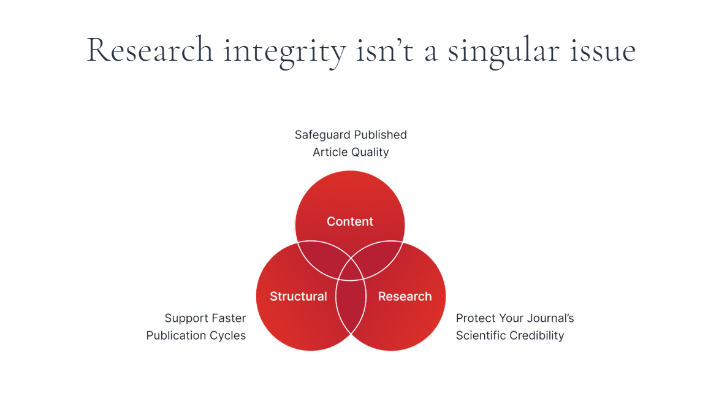
Publishing's integrity challenges are becoming increasingly complex, encompassing research integrity, content integrity, structural compliance, policy adherence, and editorial quality among other things. This isn’t a singular issue.
Yet the industry's response has largely been to add more tools. One tool for plagiarism. Another for references. Another for image manipulation. Another for AI-generated content. Editorial teams are left switching between systems, trying to piece together a complete picture.
Publishing will be not be served well by building more disconnected features. What we need is a more coherent and credible infrastructure layer – one that is not bound by a particular technology. One that is modular, scalable, flexible.
Is there a silver bullet to solve all our integrity problems?
If only. We realised we were working around the assumption that one technology (looking at you, AI) will solve all our problems. When we broke free of that assumption, our collective thinking started to shift.
We stopped asking what the most powerful AI model is, and instead asked – what is the most effective technology to address this specific problem?
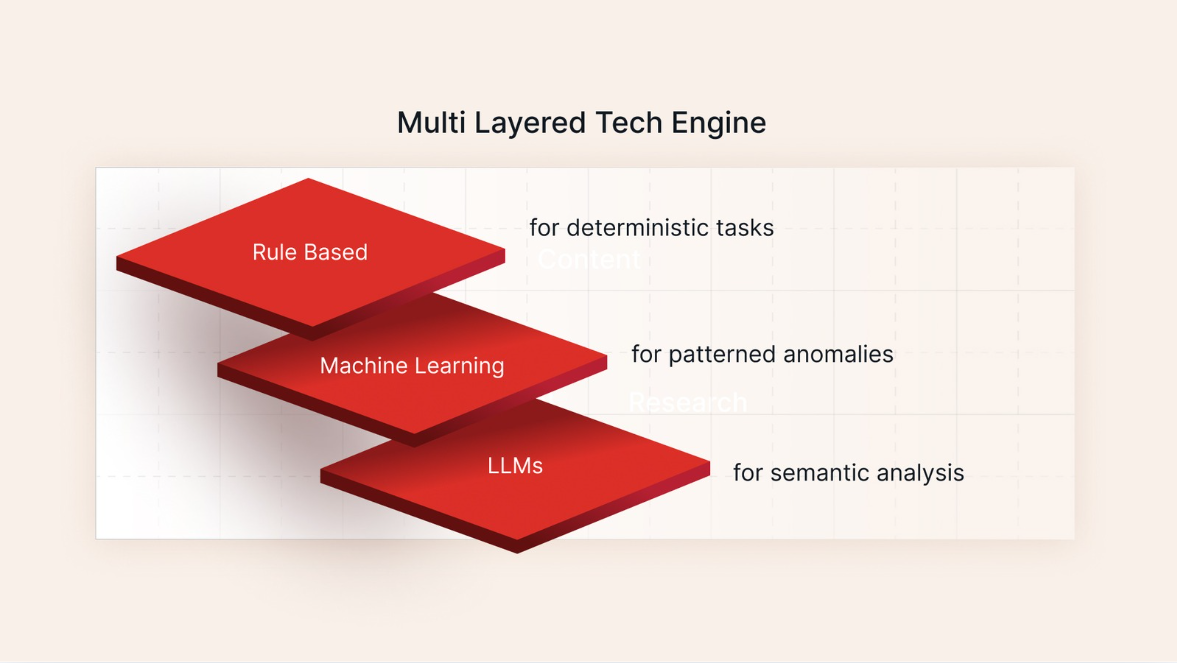
Because different problems need different solutions. You do not need GPT 5 to check if an ethics statement is missing; a rule-based system will do a better job. A traditional rule-based engine cannot detect nuanced semantic manipulation of AI-assisted writing. Classical machine learning may be extremely effective at detecting unusual submission behaviours and patterns that humans would never be able to assess at scale.
The real opportunity lies in orchestrating these technologies intelligently.
That philosophy is at the heart of Reports by Enago. Rather than treating integrity checks as isolated activities, we bring together structural, content, and research integrity signals into a single workflow. The goal is to help publishers improve quality upstream, reduce editorial friction, and make better decisions at scale.
Integrations and milestones
- In March 2026, Enago invested in Signals along with ACS and other partners. We are now fully integrated and publishers have access to both platforms.
- For the Royal Society of Chemistry, Reports has crossed the 10,000-manuscripts milestone. Happy editors and happier authors. Our scope of manuscript checks at submission will expand going forward.
My colleague Dr. Krishna Kumar presented a poster at SSP around a version of Reports by Enago we developed and deployed for a customer with a very specific submission problem.
For a demo and to see what Reports can do for you, get in touch: publishers@enago.com

