A surprising proportion of submitted manuscripts trigger intellectual property (IP) concerns during journal screening: a case-study analysis of 400 consecutive submissions found unacceptable levels of plagiarized material in 17% of papers. At the same time, publishers and screening services are scanning millions of manuscripts annually. iThenticate now checks millions of documents each year as part of editorial workflows making early prevention essential.
For researchers, IP conflicts (including plagiarism, undisclosed prior publication, improper use of third‑party material, and authorship disputes) can delay peer review, lead to rejection, or result in retraction and reputational damage. This article explains what those conflicts are, when they typically arise, why they matter, and most important how you can avoid them at the submission stage. You will find a practical pre‑submission checklist, permission and licensing guidance, recommended tools and institutional actions, plus actionable tips for common mistakes.
Table of Contents
What intellectual property conflicts mean
- Intellectual property (IP) is the set of legal rights that protect creations of the mind for academic authors this mainly includes copyright in written text, figures, and datasets, and (in some contexts) patents and trade secrets.
- Common IP conflicts in manuscript submission include:
- Plagiarism and text recycling (self‑plagiarism).
- Use of third‑party copyrighted material (figures, tables, long text excerpts) without permission.
- Undisclosed prior publication or dual submission, including unclear preprint handling.
- Authorship disputes and disagreements over contributorship or ownership of data.
- Undeclared competing interests that bear on IP or commercialization claims.
Why these conflicts occur
- When multiple collaborators contribute without clear documentation, authorship and ownership become ambiguous. Journals increasingly ask for explicit contribution statements to reduce disputes.
- When language is reused across versions (conference paper → preprint → journal article) without citation or disclosure, editors may treat text recycling as unethical duplication. Preprint policies vary by publisher; some accept preprints but expect transparency about licensing and versioning.
- When authors include images, tables, or reproduced material without securing permissions, the publisher or a rights holder can raise a claim that halts publication or triggers legal action.
- Plagiarism often results from poor note‑taking, translation issues, or misunderstanding of citation norms; detection rates in submissions are nontrivial. Proactive screening and revision reduce risk.
How is IP during submission different from general IP concerns
- Submission IP checks are narrowly focused on originality, attribution, licensing of included material, and prior dissemination; they are not full legal IP audits. The aim is to ensure ethical publication and avoid infringement prior to formal acceptance. Publishers use policies and screening tools to identify problems early, not to adjudicate complex ownership disputes (which may be referred to institutions).
Practical steps to avoid IP conflicts
Submit with complete integrity — every time.
Powered by iThenticate and checked against 47 billion web pages, 190 million paywalled articles, and 200+ million open access works — the most comprehensive check available before submission.
Get Plagiarism Report →- Clarify authorship and contributions
- At project start, agree on roles and update contributors as work changes. Use a contributor taxonomy (e.g., CRediT) and keep a written record. This prevents later disputes and aligns with journal requirements.
- Run an originality check before submission
- Use the same class of tools publishers use (e.g. iThenticate/Turnitin) to detect problematic overlaps and to distinguish legitimate overlaps (methods, standard phrases) from plagiarism. Enago’s plagiarism check uses iThenticate and provides expert, annotated reports to help you act on flagged sections.
- Declare prior dissemination and preprints
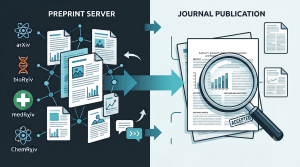
- If the manuscript or substantial parts were posted to a preprint server, state this in the cover letter and manuscript, and follow the target journal’s preprint/licensing rules (some journals accept preprints but may restrict licensing choices). Keep preprint versions updated to link to the accepted article once published.
- Secure permissions for third‑party material
- For figures, long tables, or large text extracts: identify the rights holder early, request written permission (retain records), and include a permissions statement in the submission. If content is under a Creative Commons license, check the exact CC terms before reuse.
- Avoid self‑plagiarism
- If reusing previous material (e.g., methods text), cite the original work and paraphrase; where verbatim reuse is unavoidable, obtain permission or declare it explicitly. Many journals allow limited methods overlap with attribution.
- Disclose conflicts of interest and funding
- Full disclosure of financial and intellectual interests protects you and the journal. If an author has a patent application or commercial relationship related to the topic, disclose it in the cover letter and article.
Permissions, licensing, and copyright transfer: what to know
- Copyright transfer agreements (CTAs) and exclusive license agreements differ: a CTA typically assigns copyright to the publisher; an exclusive license lets authors retain copyright while granting publishing rights. Read the agreement carefully and consider whether it limits your ability to reuse your own material (e.g., in a thesis).
- For preprints: avoid assigning copyright before formal publication; many publishers advise authors to retain copyright when posting preprints and to prefer no‑reuse licenses on preprint servers unless necessary. Check the journal’s policy before choosing a CC license for preprints.
Tools, institutional resources, and good practices
- Use a version control system for manuscripts (track changes, dated drafts) and maintain a source log that records where images/data originated and any permission correspondence.
- Use ORCID IDs for all authors to reduce identity confusion and link contributions. Encourage co‑authors to review all submission materials and the cover letter prior to submission.
- If flagged by a similarity check, review matches carefully. Context matters: methods or common phrases may be harmless, whereas unattributed ideas or copied text are not. If in doubt, revise and cite or quote properly.
Common mistakes and how to fix them
- Mistake: Assuming short copied passages are “too small” to matter.
Fix: Even short unattributed phrases can be flagged; always quote or paraphrase with citation. - Mistake: Uploading a preprint without checking journal policy.
Fix: Declare the preprint at submission and verify license compatibility. - Mistake: Last‑minute author list changes without documented consent.
Fix: Use an authorship change form and obtain written agreement from all authors before submission.
Final practical checklist
- Confirm authorship and obtain written consent from all authors.
- Run an originality check and address flagged items.
- List and attach permissions for any third‑party material.
- Declare preprints and related submissions in the cover letter.
- Disclose conflicts of interest, funding, and patent/commercial links.
- Read the target journal’s CTA/licensing terms before acceptance.
By implementing these steps, you reduce the risk of IP conflicts slowing or derailing your manuscript. Aim for transparency, documentation, and early use of the same screening tools publishers use. Enago’s publication support packages combine subject‑expert manuscript editing with iThenticate‑powered plagiarism checks and annotated reports, plus guidance on permissions and submission letters. These services can help identify and resolve IP risks before you submit, so you can focus on the science rather than administrative work.
Frequently Asked Questions
Research shows 17% of submitted manuscripts contain unacceptable levels of plagiarized material during journal screening, making pre-submission plagiarism checks essential for all researchers.
Use the same tools publishers use, such as iThenticate or Turnitin, to detect text overlaps. These tools help distinguish legitimate reuse (like methods sections) from problematic plagiarism before journals flag your work.
Yes, you need written permission from the copyright holder (usually the publisher) to reuse figures, tables, or long text excerpts, even from your own previous work, unless the material uses a permissive Creative Commons license.
Most journals accept preprinted manuscripts, but you must declare the preprint in your cover letter and ensure the preprint license complies with the journal's policy. Check specific journal guidelines before submission.
Self-plagiarism means reusing your own previously published text without citation. Avoid it by citing your original work, paraphrasing content, and declaring any necessary verbatim reuse, especially in methods sections.
IP conflicts can delay peer review, lead to desk rejection, or cause retraction if discovered post-publication. Proactive screening and proper attribution before submission prevent these career-damaging outcomes.