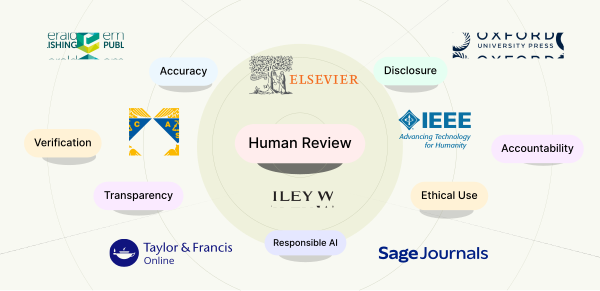
Take your manuscript from AI-edited to human-verified.
All major publishers around the world require that your scholarly manuscript is reviewed by a qualified human being before being submitted.
Use GenAI as an Assistant. NOT as Authority.
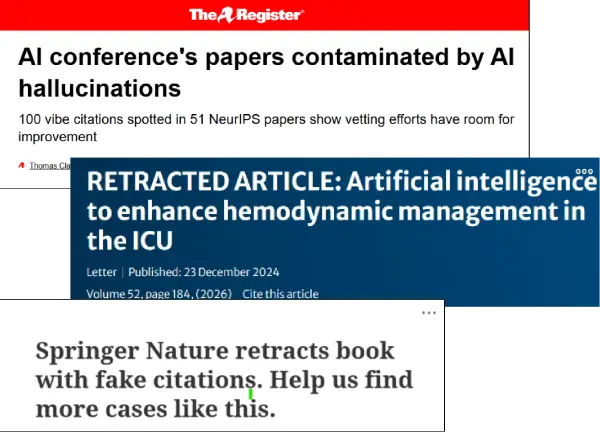
AI hallucinates
AI tools like GPT, Claude, Gemini etc can hallucinate. They can produce confident-sounding sentences which are factually untrue. They can make things up, so output should not be blindly trusted.
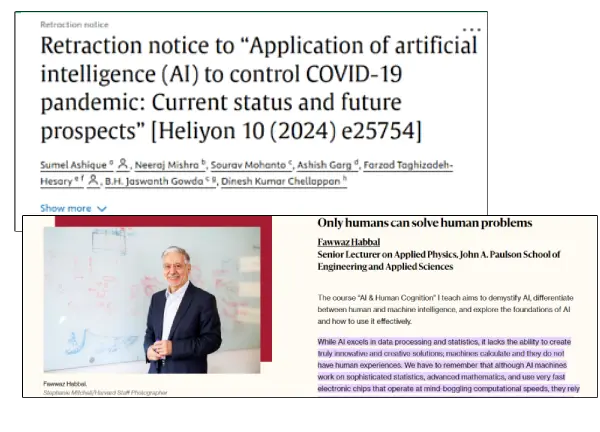
Critical thinking cannot be left to AI
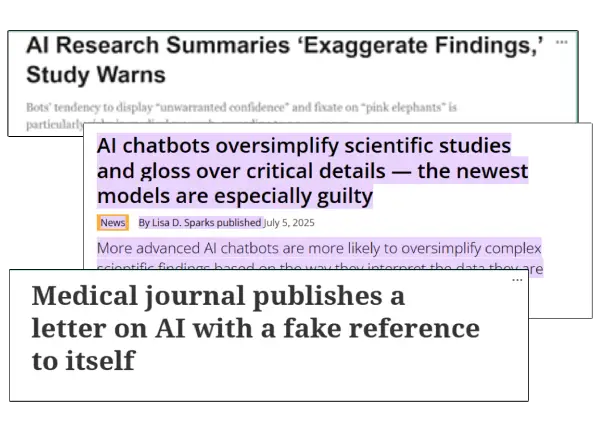
AI may not make good judgements on your data. For example, it could interpret correlation as causation. AI can summarize findings, but it cannot always evaluate whether the evidence actually supports the claims being made.
AI can change your research
The most common use of GenAI is to polish language. Tools often use synonyms and paraphrasing, which can fundamentally change the meaning of your writing. ‘Parkinson’s Disease’ for example, could be rewritten to ‘Parkinson’s Affliction’, which would make your writing incorrect!
Quick answers to common questions around using GenAI
01
Is it mandatory to get a human to review my manuscript?
Yes, all major publishers require that manuscripts are reviewed by a human being before submission, even if your use of AI is minimal. This is no longer an optional best-practice, but an essential compliance measure.
02
What should this human verify?
Whether you have used GenAI to rewrite sections, or polish your language, the person you choose should check your entire manuscript, ensuring that the meaning and essence of your content has not changed. They should check for any errors that may have been introduced, and also that any inferences the AI tool has made, are correct.
03
Who would be the right person to review my manuscript?
The person reviewing your manuscript should have a strong grasp on language, with subject matter expertise. This is especially important if you have translated your manuscript from a different language to English.
04
Can I check my own manuscript?
Yes, absolutely. As long as you are also proficient in English. So if you are confident that you can pick up on any subtle language changes that the AI tool has made, you are the right person! Remember that the smallest change by a GenAI tool can alter the meaning of your content.
05
Should I use a professional service to help me with human review?
Yes, you certainly can. If you can’t find the right person, using a professional services company is a good idea. You can then get access to a subject matter expert, who is also proficient in English, with plenty of experience editing papers like yours. This becomes even more useful if you have translated your manuscript from a different language to English. Remember that you, as the author, are still responsible for the validity of the research.
The most prestigious publishers are trusting human review
The world’s top publishers are enforcing human review for all manuscripts that have any input from GenAI, however minimal. The responsibility and accountability of this review lies with authors.
How a professional editor/reviewer can add value to your paper
Professional editors can add immense value to your manuscript. They can ensure any AI input makes sense, while also editing your paper for a greater chance of acceptance.
01
Experience in publishing
Professional editors have often worked with prominent and prestigious journals like The Lancet and Nature.
02
Excellence in English
Working out of native English-speaking countries including the UK and USA, these editors have a strong grasp on the language.
03
Deep domain knowledge
You can find an editor with deep experience in your specific domain, who can add value to your writing.
The Responsible Use of AI Initiative