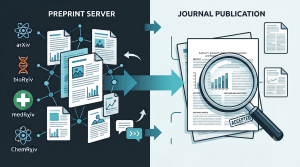
Journal selection matters more than journal prestige. While many researchers default to “top‑quartile” (Q1) journals because of perceived prestige, this single metric can mislead and delay publication. Effective journal selection aligns your research manuscript with the right readership, methodological expectations, and open‑access or funding constraints. This article explains what quartiles and common metrics mean, why Q1 journals may not always suit your work, and provides a practical, evidence‑based checklist to choose the best journal for your manuscript.
Table of Contents
What quartiles and common metrics mean
- Impact factor (IF): a journal-level metric that estimates average citations per article over a specified window (see Clarivate/JCR and Wikipedia for details).
- SJR (SCImago Journal Rank): a prestige-weighted citation metric that accounts for the influence of citing journals.
- Quartiles (Q1–Q4): category-based ranks derived from metrics such as SJR or JCR indicators; Q1 represents the top 25% in a subject category.
Note: These metrics measure citation patterns and perceived prestige not topical fit, methodological suitability, or practitioner uptake.
Why top‑quartile journals may not be the best fit
Scope mismatch and audience misalignment
Top‑quartile journals often favour broad, high‑impact topics. If your work is highly technical, regionally focused, or primarily intended for practitioners, a specialist or society journal may deliver greater real‑world impact and citations within the community that will act on your findings.
Methodology and article‑type constraints
High‑rank journals commonly prefer certain study designs (large RCTs, big data analyses, major theoretical advances, or systematic reviews). Niche contributions method papers, negative results, replication studies, or resource/dataset reports may be deprioritized even when scientifically rigorous.
Increased desk‑rejection rates and longer timelines
Q1 journals receive heavy submission volumes and triage aggressively. That raises desk‑rejection risk and can extend peer‑review and revision cycles, delaying dissemination. If rapid communication matters for funding obligations or time‑sensitive findings this trade‑off is important.
Perverse incentives and reproducibility concerns
The pressure to publish in top tiers can encourage novelty framing at the expense of clarity and reproducibility. Meta‑research indicates that prestige and methodological reliability do not always correlate perfectly; prioritizing the right methodological fit and transparent reporting is often more defensible.
Cost, open‑access mandates, and compliance
High‑impact journals may have high APCs or restrictive open‑access terms. If funder mandates or institutional budgets limit APCs, select journals with suitable open‑access policies or repository options.
Interdisciplinary work and classification limits
Interdisciplinary manuscripts often fall between subject categories used for quartile assignment. A strong interdisciplinary or specialized journal even if not Q1 may offer better readership and discoverability across several communities.
When you should target a top‑quartile journal
- Your findings address a broad, international audience and represent a substantial theoretical or empirical advance.
- You can accommodate long review timelines and potential APCs.
- Career, institutional, or grant priorities explicitly value high‑quartile publication.
A practical checklist: How to choose the right journal for your manuscript
-
Define your primary objective(s)
- Audience: specialists vs. broad disciplinary readers
- Outcome: rapid dissemination vs. prestige for evaluation
- Constraints: APCs, funder open‑access mandates, data sharing
-
Assess scope and topical fit
- Read 10–15 recent articles (last 12–18 months) to check topical and methodological fit.
- Review author guidelines for article types, word limits, and specialty sections.
-
Evaluate editorial and peer‑review policies
- Does the journal require reporting standards (e.g., PRISMA, CONSORT) or data/code deposition?
- Are registered reports or transparent peer review options available?
-
Estimate acceptance likelihood
- Compare your study design, sample size, and novelty with recent accepted papers.
- Consult colleagues or mentors with submission experience in the target journal.
-
Balance metrics with practical criteria
- Use IF, SJR, and quartiles as one input not the sole determinant. Consider altmetrics, readership demographics, and regional reach.
-
Prepare fallbacks
- Rank 3–5 journals by scope fit, audience alignment, and realistic acceptance chance. Keep manuscripts formatted to ease transfers if needed.
Your research, visualized by a subject matter expert.
A specialist from your research field reads your manuscript, creates the concept, and works with professional illustrators to deliver a journal-ready graphical abstract in 10 days.
Create Your Graphical Abstract →Example: strategic fit over prestige
- Case Study 1: A researcher studying the impact of a local environmental policy initially targeted a Q1 journal in environmental science. After rejection due to limited global relevance, they published in a Q3 regional journal, where the article gained significant traction among policymakers and local researchers.
- Case Study 2: During the COVID-19 pandemic, researchers prioritized journals with rapid review cycles, even if they weren’t top quartile, to ensure timely dissemination of critical findings.
- Case Study 3: A research team reports a mixed‑methods evaluation of a surgical workflow change specific to a subspecialty. A high‑profile general medical Q1 journal could yield visibility but limited practice change among surgeons. A reputable specialty society journal can offer faster review, lower APCs, and higher uptake among clinicians producing greater practical impact.
Common mistakes and how to avoid them
- Mistake: Selecting solely on IF or quartile. Avoid by combining metrics with scope, article type, and readership analysis.
- Mistake: Ignoring editorial policies until submission. Avoid by reviewing author instructions and reporting checklists before finalizing the manuscript.
- Mistake: Submitting despite methodological misalignment. Avoid by auditing recent publications in the journal to confirm methods and sample size expectations.
Practical tips and quick wins
- Use the journal’s recent tables of contents to test topical fit.
- Send a concise pre‑submission inquiry when in doubt.
- Maintain a submission timeline with a clear “plan B” list to reduce downtime after rejection.
- If your work is interdisciplinary, pick journals indexed across relevant subject categories to broaden discoverability.
Final Thoughts: Making Informed Choices
While top quartile journals play a vital role in academic publishing, they are not the sole path to research impact and recognition. Effective dissemination depends on aligning your research with the right audience, scope, and publication platform. By carefully considering factors like relevance, timelines, and audience, researchers can ensure their work reaches its intended impact.
For researchers seeking guidance, Enago’s comprehensive suite of services, including journal selection and manuscript editing, provides practical solutions to navigate the complexities of academic publishing. By making informed choices, you can maximize the visibility and impact of your research, regardless of the journal’s quartile.
Embrace the diversity of publishing options available, and remember: the best journal for your research is the one that aligns most closely with your goals and audience.
Frequently Asked Questions
To select the best journal for your manuscript, assess your research's objectives, audience, and topical fit. Consider metrics like impact factor (IF) and SJR, but also factor in practical constraints like APCs and open-access mandates. Review recent articles in the journal to confirm methodological alignment, and ensure the journal’s peer-review policies match your expectations.
Impact factor (IF) measures a journal's average citations per article, reflecting its perceived prestige. SJR (SCImago Journal Rank) is a citation-based metric that also considers the quality of citing journals. These metrics help assess a journal’s visibility and reach, but they don’t always reflect the journal’s alignment with your specific research topics or audience.
Top-quartile (Q1) journals often prioritize broad, high-impact topics and large studies. They may not be suitable for highly specialized, regional, or methodologically niche research. Q1 journals also have higher desk-rejection rates and longer review timelines, which could delay your work’s dissemination, particularly for time-sensitive findings.
The scope and audience of a journal are crucial in determining whether it is the right platform for your research. A journal's focus on specific topics or methodologies ensures that your work reaches the right readers. Review recent articles and author guidelines to assess whether the journal’s editorial policies and target audience align with your study’s goals.
Common mistakes in journal selection include relying solely on impact factor (IF) or quartile rankings, ignoring a journal's editorial policies, or submitting despite a methodological mismatch. Avoid these by considering a journal’s scope, article types, and submission guidelines. Also, keep a list of backup journals in case your first choice is not a good fit.
Choosing a specialist or regional journal can be beneficial when your research addresses a niche topic or has a regional focus. These journals often offer faster review times, lower APCs, and a more targeted readership, leading to greater practical impact. In some cases, these journals may provide more relevant exposure compared to a broad, high-impact Q1 journal.